
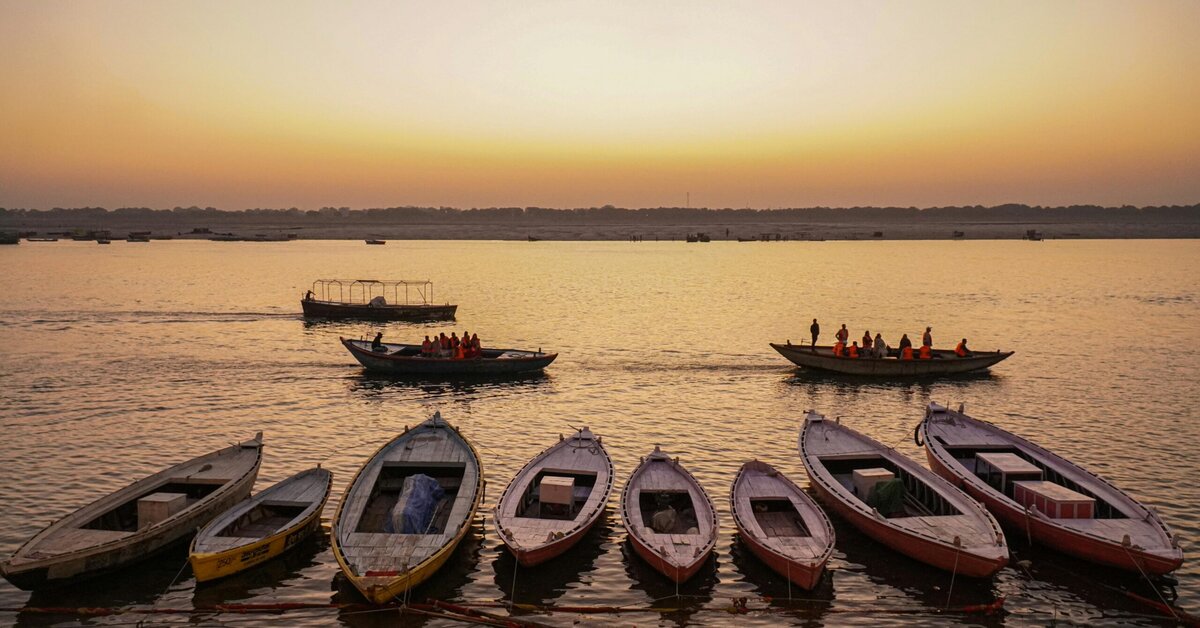
Have you ever wondered what it feels like to travel through time? An evening rickshaw ride through Old Banaras comes remarkably close to that experience. As the sun begins its descent toward the horizon, casting golden light across the ancient city’s labyrinthine lanes, something magical happens. The temperature softens, the harsh glare of midday fades, and Varanasi transforms into a living canvas of shadows, silhouettes, and flickering flames.
This isn’t just transportation—it’s a journey into the soul of one of the world’s oldest continuously inhabited cities. From the modest seat of a cycle rickshaw, you become part of the street theater that has played out in these lanes for thousands of years. The gentle ringing of the rickshaw bell, the rhythmic squeak of wheels, and the labored breathing of your puller create a soundtrack that somehow feels both contemporary and eternal. You’re not watching Banaras; you’re flowing through it, becoming temporarily woven into its endless tapestry of life.

Why Choose an Evening Rickshaw Ride?
The Unique Perspective of a Rickshaw
Why a rickshaw instead of walking or taking a motorized vehicle? The answer reveals itself within the first few minutes. A rickshaw moves at exactly the right pace—slow enough to observe details you’d miss from a car, yet faster than walking, allowing you to cover more ground without exhaustion. You sit elevated above the street level, giving you a theater-box view of the unfolding drama around you.
Unlike the enclosed cabin of an auto-rickshaw or car, a cycle rickshaw keeps you exposed to the elements in the best possible way. You feel the cooling evening breeze, smell the jasmine garlands being strung together, hear the temple bells from every direction, and can reach out to accept a fresh samosa from a street vendor without even dismounting. This openness creates vulnerability that paradoxically makes you feel more connected rather than less secure.
The rickshaw also navigates spaces that cars cannot access. The oldest, most atmospheric parts of Banaras consist of lanes barely wide enough for two people to pass comfortably. Your rickshaw puller knows every shortcut, every hidden temple, every spot where something interesting is always happening. You’re not following a predetermined tourist route—you’re experiencing the city as locals do, through the expertise of someone who has pedaled these lanes for years.
Perfect Timing for Exploration
Evening in Banaras holds a special quality that neither harsh afternoon nor deep night can match. Around 4:30 or 5:00 PM, the city begins its transition from day to night—a liminal time when both modes of existence overlap. Shops are still open but beginning to light their evening lamps. Temples prepare for evening aarti while children finish their play before dinner. The Ganges reflects the changing sky as boats return from the day’s journeys.
The temperature becomes comfortable, especially after the intense heat of midday. If you’ve spent your morning and afternoon sightseeing, you’re probably feeling somewhat exhausted—the rickshaw ride offers rest while still allowing exploration. You can sit back, relax your tired feet, and let the city come to you instead of chasing after it.
The lighting during this golden hour is a photographer’s dream. The low angle of the sun creates dramatic shadows and highlights textures—the weathered wood of ancient doors, the intricate carvings on temple facades, the wrinkled faces of elderly shopkeepers. As daylight fades, oil lamps and electric lights begin to twinkle, creating a magical interplay between natural and artificial illumination.
Starting Point and Route Planning
Best Places to Begin Your Journey
Where you start your rickshaw journey depends on where you’re staying, but certain locations serve as excellent launching points. If you’re near the ghats, starting from Assi Ghat in the south allows you to travel northward toward the central ghats, moving through progressively older and more atmospheric sections of the city.
Alternatively, beginning at Godowlia Chowk—the commercial heart of Old Banaras—places you immediately in the thick of activity. From here, your rickshaw can weave toward the ghats, into the temple districts, or through the bazaar areas depending on your interests. The advantage of this starting point is its accessibility; most visitors can easily reach Godowlia by various means before transitioning to the rickshaw.
Some prefer starting from their hotel or guesthouse, turning the entire journey into an adventure from beginning to end. This approach gives you a sense of how the city’s character changes as you move from newer to older sections, from wider roads to impossibly narrow lanes.
Popular Routes Through Old Banaras
The Ghat Route
One classic route follows the contour of the Ganges, moving from ghat to ghat. Your rickshaw traces the lane that runs roughly parallel to the river, occasionally dipping closer to offer glimpses of the water and the activity along the ghats. This route showcases the diversity of Varanasi’s waterfront—from quiet residential ghats where locals bathe undisturbed to the grand staircases of major ghats thronging with pilgrims and tourists.
Along this path, you’ll pass crumbling havelis (mansions) of former nobility, ashrams where spiritual seekers live, and countless small temples tucked into unexpected corners. The route naturally culminates at Dashashwamedh Ghat for the famous Ganga Aarti, making it perfect if you’re timing your ride to witness this spectacular ceremony.
The Temple Lane Circuit
An alternative route plunges deeper into the ancient heart of Banaras, threading through the maze of lanes surrounding Kashi Vishwanath Temple. Here, the rickshaw moves slowly through crowds of pilgrims, past shops selling religious paraphernalia, flower garlands, and sweets offered to deities. The air becomes thick with incense smoke and the sound of chanting.
This route offers maximum cultural immersion. You’ll pass dozens of small temples, each with its own devotees and traditions. The Vishwanath Gali (lane) itself is too narrow for rickshaws, but your puller knows the parallel routes that circle this area, offering glimpses down the famous lane while avoiding the most congested sections. This circuit provides the most authentic experience of Banaras as a living religious city rather than a tourist destination.
The Rickshaw Experience Itself
Meeting Your Rickshaw Puller
Your experience begins the moment you negotiate with a rickshaw puller. These men—and they are almost exclusively men—range from young boys barely in their teens to elderly gentlemen who have been pedaling these lanes for half a century. Each carries a story, a family to support, and intimate knowledge of every inch of Old Banaras.
The negotiation dance is part of the experience. They’ll quote a price; you’ll counter with something lower; smiles and head wobbles will be exchanged; eventually, you’ll settle on a figure somewhere in the middle. Don’t be too aggressive in bargaining—these men work incredibly hard for modest earnings. A fair price recognizes both your tourist status and their labor while not being completely exploitative in either direction.
Many rickshaw pullers speak surprisingly good English learned entirely from conversations with tourists over the years. Others know only a few words, but the language barrier rarely diminishes the experience. Some are naturally chatty, pointing out sights and sharing local knowledge. Others are quiet, letting you absorb the experience in your own way. Both types offer value—the extrovert provides context while the introvert allows contemplation.
The Rhythm of the Ride
Once moving, you quickly attune to the rickshaw’s particular rhythm. There’s the irregular ringing of the bell—ting-ting-ting—warning pedestrians, cows, dogs, and motor vehicles of your approach. The creak of the rickshaw’s frame becomes a constant companion, a sound that has echoed through these lanes since rickshaws first arrived generations ago.
The pace varies dramatically. On wider streets, your puller finds a steady cycling rhythm, and you move smoothly forward. Then the lane narrows, crowds thicken, and progress becomes a stop-start affair. You squeeze past a cow standing motionless in the middle of the path. You wait while a family negotiates with a shopkeeper across the width of the lane. You detour around a impromptu prayer ceremony that has claimed the space.
Rather than being frustrating, these interruptions become part of the charm. Each pause offers a new vignette of city life to observe. You’re not late for anything; you’re not trying to reach a destination as efficiently as possible. The journey itself is the point, and the irregular rhythm reflects the organic, non-linear nature of life in these ancient lanes.
Sounds, Smells, and Sensations
Your rickshaw ride assaults your senses in the most wonderful way. The soundscape constantly shifts—temple bells from multiple directions creating an accidental symphony, vendors calling out their wares in melodic cadences, children shrieking with laughter, devotional music spilling from open temple doors, and the ever-present hum of human activity that never quite stops in this dense urban environment.
The smells prove equally varied and evocative. One moment, you’re enveloped in the sweet smoke of sandalwood incense wafting from a temple. The next, you’re passing a street food vendor, and the aroma of frying samosas makes your stomach growl. Then comes the distinctly earthy smell of the Ganges mixed with the fragrance of marigold garlands, followed by the less pleasant but equally authentic odors of open drains and crowded human habitation.
The visual stimulation never stops. Color bursts from every direction—the saffron robes of sadhus, the brilliant pink and orange saris of women, the gold and red of temple decorations, the weathered earth tones of ancient buildings, and the silvery gleam of the Ganges when it comes into view. Your eyes don’t know where to rest because every angle offers something worth observing.
Sights Along the Evening Journey
Ancient Temples Lit by Oil Lamps
As evening progresses, temples throughout Old Banaras begin their nightly transformation. Oil lamps—diyas—are lit in niches, along windowsills, and before deities. The flickering flame light has an entirely different quality from electric illumination, casting dancing shadows that give the carved stone deities an appearance of subtle movement, as if they’re breathing.
From your moving rickshaw, you catch glimpses into temple interiors as you pass open doorways. A priest performing aarti, circling a flame before a deity. Devotees prostrating themselves on worn stone floors. An elderly woman carefully placing fresh flowers before a Shiva lingam. These moments of devotion, viewed briefly and then gone, create a meditation on the continuity of faith across centuries.
Some temples are grand and architecturally significant; others are tiny shrines barely bigger than a closet, their deity protected by an iron grill. The remarkable thing is their sheer density—in Old Banaras, you’re never more than a few meters from some form of sacred space. Your rickshaw puller can often point out temples you’d never notice on your own, hidden behind ordinary doors or down passages that look like private residences.
Street Vendors and Evening Markets
The evening hours bring out a particular category of vendors. The breakfast sellers have closed up; the lunch spots are quiet; now it’s the snack vendors’ time to shine. From your rickshaw, you’ll spot men with carts selling chaat—those addictive Indian savory snacks that combine crispy, creamy, tangy, and spicy in impossible-to-resist ways.
Paan shops display their elaborate arrays of ingredients—betel leaves, rose petal jam, slaked lime paste, areca nuts, and dozens of other components that the paan-wallah combines with theatrical flair. Watching the creation of paan is a performance art, with the vendor’s hands moving in practiced patterns faster than the eye can easily follow.
Small markets emerge in certain lanes as evening approaches. Vegetable vendors arrange their pyramids of tomatoes and cauliflower. Flower sellers string marigold garlands that will be offered at temples or used for domestic prayers. The commerce of daily life unfolds around you, unhurried and eternal, operating by rhythms that predate your great-grandparents’ birth.
Glimpses of Daily Life
Chai Stalls and Paan Shops
Few things are more quintessentially Indian than a chai stall at dusk. From your rickshaw, you’ll spot dozens—small operations consisting of a pot of simmering tea, a burner, a stack of small clay cups, and a proprietor who has been making chai the exact same way for decades. The stalls become gathering places where locals stand around discussing the day’s events, solving the world’s problems, or simply enjoying the sweet, spiced tea in companionable silence.
Paan shops serve a similar social function. After dinner, men (and occasionally women) stop by for paan—the betel leaf preparation that serves as both digestive aid and mild stimulant. The shop becomes a neighborhood hub where news is exchanged, gossip flows, and the paan-wallah serves as an unofficial community information center. Observing these social spaces from your passing rickshaw offers insight into how community functions at the neighborhood level in India.
Children Playing in the Lanes
As the heat of day fades, children emerge to play in the lanes. Boys kick around makeshift soccer balls, their games momentarily pausing to let your rickshaw pass before immediately resuming. Girls play hand-clapping games or jump rope, their chanting voices adding to the evening’s soundscape. Young children run behind your rickshaw for a few meters, delighted by the novelty of waving at a tourist.
These glimpses of childhood, surprisingly unchanged despite all modern technology, remind you that these lanes have witnessed generations of the same play. The spaces themselves shape the games—narrow lanes favor running games and cricket with makeshift bats, while wider sections host more elaborate activities. The children seem entirely unbothered by traffic, sacred cows, or the general chaos that might alarm Western parents, navigating their environment with impressive competence.
Cultural Encounters and Interactions
Conversations with Your Rickshaw Puller
If your rickshaw puller is talkative, you’ll likely receive running commentary on the sights you’re passing. He might point out which temple is oldest, where the best lassi in Banaras can be found, or which family has lived in a particular haveli for twelve generations. This local knowledge, impossible to find in guidebooks, transforms your ride from simple sightseeing into genuine cultural education.
Many pullers will ask where you’re from, express amazement that you’ve traveled so far to see their city, and sometimes share surprisingly philosophical observations about life, religion, and the difference between cultures. Despite language limitations, these conversations often touch on universal themes—family, work, hopes for children, the nature of happiness—that reveal how fundamentally similar human concerns remain regardless of culture.
Sometimes the conversation takes practical turns—your puller might recommend a restaurant his brother-in-law works at, or suggest that you need a guide for tomorrow and he knows someone trustworthy. These pitches are rarely aggressive, and you can politely decline without damaging the friendly atmosphere. Consider, though, that for these men, tourists represent not just income but genuine points of connection with the wider world beyond these lanes.
Brief Encounters with Locals
As you navigate the lanes, countless small interactions occur. An elderly man sitting on his doorstep nods and smiles as you pass. A shopkeeper calls out “Welcome to Varanasi!” A group of women carrying water pots pauses to let your rickshaw through, and you exchange namaste gestures. A sadhu with a trident makes brief eye contact, and in that moment, something wordless passes between you.
These micro-encounters accumulate into a feeling of being welcomed into the city’s life rather than being an external observer. The locals’ reactions to tourists vary—some are curious, some indifferent, some hopeful for business, and some genuinely hospitable—but there’s rarely hostility. Varanasi has been receiving visitors for millennia; tourists are simply the latest incarnation of pilgrims who have always come seeking something from the city.
The Language of Gestures and Smiles
When words fail, which they often do, you discover how much can be communicated through gesture and expression. A smile is universally understood and usually returned. The head wobble—that distinctly Indian gesture that can mean yes, no, maybe, or “I acknowledge what you said”—becomes strangely infectious, and you might find yourself wobbling back.
Hand gestures bridge linguistic gaps. Pointing at something and looking questioningly at your rickshaw puller often elicits a name or explanation. Putting hands together in namaste conveys respect and greeting simultaneously. Even the way you hold eye contact or avoid it communicates volumes in a culture where these nonverbal cues carry significant meaning.
This wordless communication often proves more memorable than verbal exchanges. There’s something profound about connecting with another human across barriers of language, nationality, and life experience through nothing more than a shared moment of recognition—their humanity reflected in yours, and yours in theirs.
Photography Opportunities
Golden Hour Light in Narrow Lanes
Photographers often speak reverently of “golden hour”—the period shortly after sunrise or before sunset when the sun sits low in the sky, creating warm, directional light that makes everything look magical. In the narrow lanes of Old Banaras, golden hour light behaves in extraordinary ways.
The lanes run in various directions, so some receive direct golden light while others are already in shadow, creating dramatic contrasts. Shafts of light pierce through gaps between buildings, illuminating floating dust particles and creating almost visible beams. The warm glow makes the weathered textures of ancient walls look even richer, highlights the colors of textiles and flowers, and casts people’s faces in a flattering, timeless light.
From your rickshaw, you’re positioned perfectly to capture these moments. You can shoot straight ahead as the lane unfolds before you, creating images with strong leading lines. You can turn to capture side streets and the people within them. The elevated position of the rickshaw seat gives you a better angle than ground-level shooting, reducing the awkward perspective you’d get craning upward.
Candid Street Photography Tips
The rickshaw ride offers excellent opportunities for candid street photography. The constant motion means you’re not lingering awkwardly with a camera pointed at someone—you capture a moment and then you’re past. This fleeting quality often produces more natural, less self-conscious images than posed photography.
Keep your camera ready but not constantly raised to your eye. Anticipate moments slightly before they happen—the child about to jump, the priest about to ring a bell, the cow about to move. Shoot at higher ISO settings to maintain fast shutter speeds in the dimming light, accepting some grain as the price for sharp, motion-free images. Consider shooting in burst mode to capture the peak moment of action.
Be mindful of your focal length. A moderate wide-angle lens (24-35mm equivalent) works well, capturing enough context while still isolating subjects. Overly wide lenses can make everything feel distant and disconnected, while long telephotos are challenging to use effectively from a moving rickshaw. Some photographers prefer fixed 35mm or 50mm lenses, accepting the compositional limitations in exchange for optical quality and the discipline of “zooming with your feet”—though from a rickshaw, your feet stay put.
Respecting Privacy While Capturing Moments
Photography ethics become complicated in settings like Old Banaras. These are real people living their lives, not performers in a cultural theme park. Balance your desire for compelling images against their right to privacy and dignity.
Some basic guidelines: Avoid photographing people in obviously private or vulnerable moments. Be especially careful photographing women, as cultural norms around modesty can make unsolicited photography problematic. Children make charming subjects, but always be aware of not just your intentions but how your behavior might be perceived—parents everywhere are rightfully protective.
When possible, make eye contact and gesture with your camera to ask permission. Many people will smile and nod assent, some will pose, and some will decline—respect the refusal. Often the interaction itself becomes part of the experience, more valuable than the resulting photograph. If someone seems uncomfortable with your camera, lower it immediately and move on.
Consider whether you’ll share these images publicly and how. Posting identifiable images of strangers on social media raises ethical questions many photographers haven’t fully considered. The most respectful approach often involves focusing on scenes and situations rather than individuals, or ensuring that people within your frame are not the primary identifiable subject.
The Ganga Aarti Connection
Timing Your Ride with the Evening Aarti
The Ganga Aarti at Dashashwamedh Ghat is one of Varanasi’s signature experiences—a synchronized fire ceremony performed every evening that attracts hundreds or thousands of spectators. Smart planning can integrate your rickshaw ride with witnessing this spectacular ritual.
The aarti begins around sunset, with timing varying slightly by season. Starting your rickshaw journey about an hour before the scheduled aarti gives you time to experience the lanes while gradually making your way toward the ghat. Your rickshaw puller almost certainly knows the aarti schedule and can pace the ride accordingly.
As you approach Dashashwamedh, you’ll notice the crowd thickening. Pilgrims, tourists, beggars, vendors, and curious locals all converge on the ghat. The energy shifts from the calm exploration of residential lanes to something more intense and expectant. This transition itself tells a story about the city’s dual nature—intimate and grand, everyday and extraordinary.
Approaching Dashashwamedh Ghat
Your rickshaw cannot go directly to the ghat itself—the final approach requires walking. Typically, your puller will bring you as close as vehicular access permits, pointing you toward the ghat entrance. You’ll negotiate narrow lanes now completely packed with people moving in the same direction, creating a human river flowing toward the Ganges.
This approach on foot, after your leisurely rickshaw ride, creates a perfect progression. You’ve experienced the quiet beauty of the lanes; now you’re immersing yourself in the communal religious experience that draws people to Varanasi. The contrast heightens your appreciation of both experiences—the intimate and the collective, the individual journey and the shared ritual.
If you time it right, you can witness the aarti from either the ghat itself (requiring early arrival to secure a good spot) or from a boat on the river (which can be arranged in advance). After the ceremony concludes, your rickshaw puller can often be found waiting at your agreed-upon meeting point, ready to transport you back through lanes now transformed by full darkness.
Safety and Practical Considerations
Negotiating Fares
Fare negotiation deserves thoughtful attention. Rickshaw rides in Old Banaras typically cost between 100-300 rupees for an hour or two, depending on distance and duration. For longer tours or special routes, prices can reach 400-500 rupees. These amounts seem trivial to most Western tourists but represent significant income for pullers.
Negotiate before starting, being clear about where you want to go and approximately how long you want to ride. If you want the freedom to stop at various points for photographs or exploration, communicate this upfront, as it will affect the price. Some tourists prefer hiring a rickshaw for a set period—say two hours—rather than negotiating point-to-point fares, which gives more flexibility.
Be prepared with small bills. Rickshaw pullers rarely have change for large notes, and the awkward end-of-ride search for change can sour an otherwise lovely experience. Having the exact agreed-upon amount plus a small tip ready makes everyone happy.
Remember that these men work incredibly hard. Pedaling heavily laden rickshaws through crowded lanes for hours each day, often in extreme heat, is demanding physical labor. Be generous within reason. An extra 50-100 rupees costs you little but might represent a significant bonus for your puller. Balance fairness with avoiding creating expectations that make things difficult for future tourists and more impoverished travelers.
What to Bring and Wear
Dress modestly and comfortably for your evening rickshaw ride. The rickshaw offers no protection from public view, and you’re traveling through traditional areas where conservative dress is appreciated. Light, loose clothing works best—cotton pants or long skirts, shirts that cover your shoulders, and comfortable shoes you can easily slip on and off if you want to enter temples along the way.
Bring a light scarf or shawl. As evening progresses, temperatures can drop, and the breeze created by the rickshaw’s movement can feel surprisingly cool. The scarf also serves practical purposes—covering your head if entering certain religious sites, protecting against dusty conditions, or simply adding a layer of comfort.
Carry minimal valuables. A small bag with your camera, some water, a bit of money, and your phone should suffice. Leave expensive jewelry and unnecessary electronics at your hotel. The rickshaw’s open design makes theft unlikely during the ride itself, but minimizing what you carry reduces both target value and worry, letting you relax into the experience.
Don’t forget your phone or camera, fully charged, with plenty of storage space. These evening rides produce memories you’ll want to capture, and the diminishing light means you’ll be shooting a lot to get the keepers. Consider bringing a small battery pack if your devices drain quickly.
Evening in Old Banaras means crowds, especially in the lanes surrounding major temples and leading to popular ghats. Your rickshaw puller navigates these with practiced skill, but progress inevitably slows in congested areas. Embrace this rather than resisting it.
The crowds themselves become part of the spectacle. The density of humanity moving through narrow spaces creates an energy all its own—intentional, purposeful, yet somehow not frantic. You’re surrounded by pilgrims walking toward temples, locals heading home from work, vendors pushing carts, sadhus wandering, tourists exploring, and street life unfolding in infinite variety.
Safety in these crowds is generally good. Violent crime targeting tourists is rare in Varanasi. Pickpocketing can occur, which is why carrying minimal valuables makes sense. Your elevated position in the rickshaw actually provides some protection from the most common small-time theft. Remain aware without being paranoid, and you’ll likely navigate the crowds without incident.
The main challenges are sensory overload and directional disorientation. The narrow lanes, constant turns, and similar-looking buildings make it remarkably easy to lose all sense of direction. Don’t worry about this—your rickshaw puller knows exactly where he is. Surrender to being temporarily lost in the labyrinth; it’s part of the authentic experience.
Best Seasons and Times
The ideal season for an evening rickshaw ride is October through March, when Varanasi’s weather is pleasant rather than punishingly hot. During these months, evening temperatures range from comfortable to slightly cool, making the open-air rickshaw experience delightful rather than an endurance test.
Within this optimal window, November and February are particularly lovely. The monsoon rains have ended but winter cold hasn’t fully arrived. The air quality tends to be better (though Varanasi’s pollution remains a concern). Festivals like Dev Deepavali (November) add spectacular visual elements, though crowds increase correspondingly.
Avoid summer months (April-June) if possible. Temperatures regularly exceed 40°C (104°F), and evening barely provides relief. The heat radiates from stone buildings and paved lanes, creating an oppressive environment where rickshaw riding becomes an ordeal for both you and your puller. If you must visit during summer, consider early morning rides instead.
The monsoon season (July-September) presents mixed conditions. Rain can strike suddenly, and while rickshas have fold-down covers, you’re never completely protected. However, the rains wash dust from the air, cool temperatures significantly, and give the ancient city a fresh, clean quality it lacks during dry months. If you’re adventurous and don’t mind potentially getting wet, monsoon evening rides offer unique atmosphere and dramatically reduced tourist crowds.
Making Your Ride More Meaningful
Supporting Local Economy
Your rickshaw ride represents more than personal enjoyment—it’s economic participation in one of India’s most traditional forms of livelihood. The men who pull cycle rickshaws typically come from the most economically vulnerable segments of society. Many migrate to Varanasi from rural areas seeking work, sending money home to families in distant villages.
By choosing a cycle rickshaw over motorized transport, you’re directly supporting this traditional economy. Unlike taxi or auto-rickshaw companies that take significant cuts, the fare you pay a cycle rickshaw puller goes entirely to him. It’s one of the most direct forms of economic benefit tourism can provide.
Consider hiring the same puller multiple times during your stay if the first experience is positive. This creates a relationship beyond a simple transaction. He’ll get to know your interests and preferences, tailoring routes accordingly. You might even be invited to meet his family or share chai—gestures of friendship that transcend tourism’s usual superficiality.
Some tourists ask their puller’s name and stay in touch after leaving Varanasi, occasionally sending photos from the ride or even small amounts of money during particularly difficult times. While this level of engagement isn’t expected, it reflects how these brief encounters can evolve into genuine human connections that enrich both lives.
Environmental Considerations
In an era of increasing environmental consciousness, the humble cycle rickshaw deserves recognition as one of the world’s most sustainable transport forms. Zero emissions, quiet operation, minimal resource consumption in manufacturing—the ecological footprint of a rickshaw ride is essentially negligible.
Choosing rickshaws over motorized vehicles, even for short trips, makes a small but real contribution to reducing Varanasi’s air pollution and carbon emissions. Multiply this choice across thousands of tourists, and the collective impact becomes meaningful. In a city struggling with air quality issues, every human-powered journey helps.
The rickshaw’s sustainability extends beyond environmental metrics. It represents a form of livelihood that doesn’t require extensive capital investment, advanced education, or displacement of traditional communities. It’s human-scaled, neighborhood-integrated, and socially accessible in ways that modern transport systems often aren’t.
By supporting rickshaw pullers, you’re essentially voting with your wallet for a more sustainable, equitable urban transportation model. It’s a small political act embedded in what seems like simple sightseeing—a reminder that tourism involves ethical choices that ripple outward in ways we don’t always consider.
Personal Stories from the Road
Every evening rickshaw ride creates its own unique narrative, but certain moments seem to recur with different details but similar essence. I remember one ride where the puller suddenly stopped, pointing excitedly at a building I’d have passed without noticing. “My grandfather born here,” he said simply, pride and sadness mixing in his expression. In that moment, the ancient structure transformed from anonymous facade into someone’s personal history.
Another evening, approaching Dashashwamedh for the aarti, our progress stopped completely as the crowd reached impenetrable density. Rather than frustrated, my puller seemed philosophical. “Banaras is like this,” he said with a head wobble and smile. “Too many peoples, too many gods, too many everything.” We sat in the stationary rickshaw for fifteen minutes, watching the human spectacle around us, and I realized the delay was itself the experience—being suspended in this moment of crowd and anticipation, neither moving forward nor backward, simply present.
Once, during winter, I rode through lanes where families had brought their cots outside to sit in the last warmth of evening sun. Grandmothers told stories to children, men played cards, women sorted vegetables for dinner—intimate scenes of domestic life playing out publicly due to the cramped quarters inside. My puller navigated around these extended living rooms with the same care you’d take not to disrupt someone’s home, because in essence, that’s what these lanes become each evening.
These stories share a common thread—the recognition that you’re not observing a performance or visiting an attraction, but briefly intersecting with the ongoing lives of real people whose days continue after you’ve returned to your hotel, posted your photos, and eventually flown home. The rickshaw ride’s greatest gift might be this gentle reminder of your own temporary presence in a city that was ancient long before you arrived and will continue long after you leave.
Conclusion
An evening rickshaw ride through Old Banaras offers something increasingly rare in our modern world—a genuinely unhurried experience where the journey matters more than the destination. In the gentle rhythm of the bell, the creak of wheels, and the labored breathing of your puller, you find a pace that feels almost countercultural, a deliberate rejection of speed and efficiency in favor of presence and attention.
These ancient lanes, too narrow for cars and too winding for straight lines, resist the modern world’s attempts to rationalize and standardize space. From your rickshaw seat, you witness life that hasn’t fundamentally changed despite smartphones and electricity—children playing, food being prepared, prayers being offered, commerce unfolding, communities gathering. The continuity is profound and, in its own way, deeply reassuring.
The rickshaw ride doesn’t provide comprehensive understanding of Varanasi—no single experience could. But it offers something equally valuable: immersion without overwhelming, observation with participation, and connection without intrusion. You move through the city intimately yet maintain just enough separation to process what you’re experiencing.
As the ride ends and you dismount, thanking your puller and perhaps sharing a final moment of connection, you carry with you not just photographs and memories but a deeper sense of having truly been somewhere rather than merely visiting it. That feeling—of having touched, however briefly, the authentic pulse of one of humanity’s oldest living cities—stays with you long after the sights and sounds have faded into cherished remembrance.
FAQs
1. How much should I expect to pay for an evening rickshaw ride in Old Banaras?
Prices vary based on duration and route, but expect to pay between 150-300 rupees for a 1-2 hour ride through Old Banaras. Longer tours or special routes might cost 400-500 rupees. Always negotiate the fare before starting, being clear about where you want to go and how long you plan to ride. Consider the physical labor involved and be generous within reason—an extra 50-100 rupees is a meaningful tip that won’t significantly impact your budget. If your puller provides exceptional service, demonstrates extensive local knowledge, or goes out of his way to enhance your experience, reflect that appreciation in your payment.
2. Is it safe for solo female travelers to take an evening rickshaw ride?
Generally yes, rickshaw rides are safe for solo female travelers, though normal precautions apply. Choose your rickshaw puller during daylight hours when possible, ideally getting recommendations from your hotel. Communicate clearly about your route and destination. Dress modestly in accordance with local cultural norms. Avoid very late evening rides in isolated areas, sticking instead to the relatively crowded lanes of the old city. Keep your phone charged and accessible. Trust your instincts—if something feels off, politely end the ride. Most rickshaw pullers are honest, hardworking men who take pride in showing visitors their city safely and respectfully.
3. Can I ask my rickshaw puller to stop so I can take photographs or explore?
Absolutely, and most pullers are happy to accommodate stops for photography or brief exploration. Make this clear when negotiating your fare, as multiple stops may slightly increase the price. Simply tap your puller’s shoulder or say “stop please” when you want to pause. Give him some idea of how long you’ll stop—a quick photo versus a 10-minute temple visit—so he knows whether to wait with the rickshaw or find a spot to rest. This flexibility is one of the rickshaw ride’s great advantages over motorized transport with metered fares that keep running during stops.
4. What if I get lost and can’t find my way back?
Getting geographically disoriented is virtually guaranteed in Old Banaras’s labyrinthine lanes, but you’re unlikely to actually be “lost” in a problematic way. First, carry a card from your hotel with its name and address in both English and Hindi. Any rickshaw puller can get you back from there. Keep your phone charged with maps accessible, though GPS accuracy can be compromised by narrow lanes and old buildings. Most importantly, don’t panic—Varanasi is dense and crowded; you’re never far from someone who can point you toward a landmark like Dashashwamedh Ghat or Godowlia Chowk from which you can reorient. The worst case scenario involves an unexpected adventure through additional lanes before finding your way, which often becomes a highlight rather than a problem.
5. Should I tip my rickshaw puller, and if so, how much?
Tipping isn’t traditionally expected in the same way as Western cultures, but it’s increasingly appreciated given the tourist economy. If you negotiated a fair fare upfront and received good service, adding 20-30% as a tip is generous and well-received. For exceptional service—a puller who went beyond merely transporting you to actively enhance your experience with knowledge, patience, and hospitality—consider 50% or more. Small amounts matter significantly to these workers. If you have excess bottled water, snacks, or even small items from your home country, these can also be meaningful gifts beyond monetary tips. The key is sincerity—a genuine “thank you” and fair compensation mean more than mechanically overtipping without actual appreciation.